
Invasive Species Checklist: 8 Plants and Animals to Report Along the Wye
A kingfisher down the Wye is worth stopping for. So is the flash of a mayfly hatch in May. Less welcome is the sight of Himalayan balsam in thick pink ribbons along a reach you've fished for years, or a signal crayfish scuttling out from under a stone that should be holding native white-clawed crayfish. Invasive species are already part of the Wye's story, and the people most likely to notice a new colony first are the people who are out on the water anyway: anglers, paddlers, walkers, swimmers, volunteers. This checklist is for them, and for anyone who wants to turn a sighting into something useful.
Report First, Act Second
It is tempting to pull a strange plant or stamp on a strange insect, and for a few species that instinct is harmless. For most of the ones on this list it is not. Several spread from tiny fragments of root, stem or shoot, so a well-meaning attempt at removal can scatter the problem a hundred metres downstream. Others carry disease, and some sit under legislation that puts duties on landowners. Established environmental organisations have limited survey capacity and rely heavily on volunteer records to work out where to concentrate effort. A clear photograph, an accurate location and a quick report are genuinely more valuable than a heroic afternoon with a spade.
So the routine is simple: identify what you can, record it properly, and tell someone. If you are not sure what you are looking at, report it anyway and say so.
The Plants to Watch For
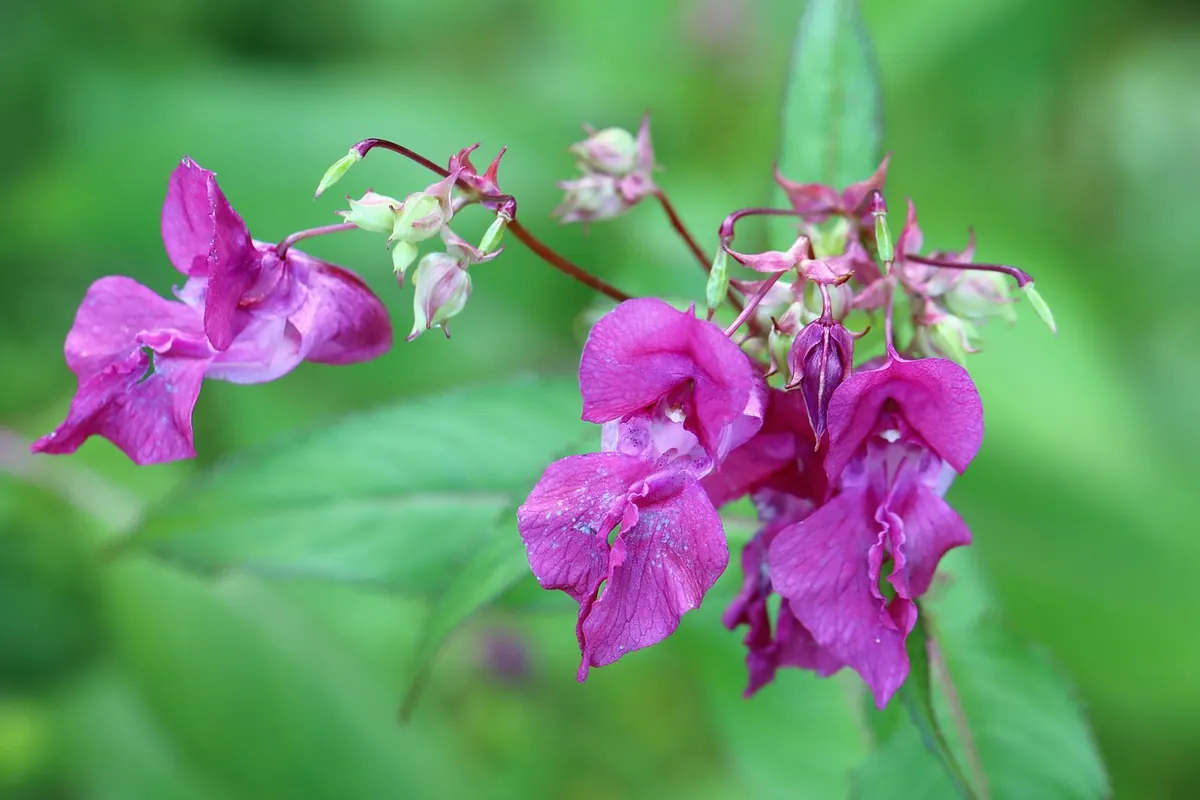
Himalayan balsam
An annual that can reach two or three metres in a good summer, with hollow reddish stems, spear-shaped serrated leaves and pink, helmet-shaped flowers from roughly July to October. The seed pods explode when touched, flinging seed several metres. It dies back completely in winter, leaving bare banks that are far more prone to erosion. Look for it on damp ground, in ditches and along the whole of the Wye's lower reaches. Small upstream patches matter most; that's where it starts.
Japanese knotweed
Bamboo-like canes, often with purple speckling, and shield-shaped leaves with a flat base. The stems zigzag slightly between leaf joints. In late summer it carries creamy-white flower spikes; in winter it collapses to brittle brown stems. On a riverbank it is a serious concern, because fragments of rhizome or stem can travel in floodwater and start new colonies downstream. There are legal responsibilities attached to knotweed in the UK, and getting it wrong can be costly, so if it is on land you own, take professional advice before touching it.
Giant hogweed
The one to keep your hands off. Leaves can be a metre across, stems are thick with purple blotches and stiff hairs, and the white flower heads sit like dinner plates on tall stalks. The sap sensitises skin to sunlight, and a brush against a broken stem can cause blistering that lasts for weeks. If you think you've been exposed, wash the area thoroughly with soap and water, keep it out of direct sun, and seek medical advice if blistering appears. Photograph it from a distance and report from there.
Floating pennywort
Think of a large, fleshy version of native marsh pennywort: round, kidney-shaped leaves on thick stalks, forming floating rafts that thicken into mats. In warm weather those mats can expand fast, cutting off light and blocking narrow channels and backwaters. It fragments easily, which is how it hitches a ride on boats, paddles and waders. Report any raft you see, especially on side channels and ditches.
The Animals to Watch For
Signal crayfish
Larger and bolder than the native white-clawed crayfish, usually brown with a red underside to the claws and a pale turquoise-white patch at the hinge of the claw. It carries crayfish plague, which native crayfish have no resistance to, so a single introduction can wipe out a population. Never move a crayfish, never carry damp kit from one river to another, and never tip a bucket of river water into a different stretch.
American mink
Dark brown, low to the water, with a white chin patch and a confident, sinuous swim. Often seen at dusk. Where mink are established, water voles usually disappear, so sightings, tracks and droppings are all worth recording.
Killer shrimp
A small, striped freshwater shrimp, around three centimetres long, with an aggressive appetite for native invertebrates and fish eggs. It is established at a limited number of UK sites, and the priority is keeping it from spreading on wet gear.
Chinese mitten crab
Unmistakable once seen: claws covered in dense brown fur. It spends much of its life in freshwater and migrates downstream to breed, and its burrowing can undermine banks. A record from a new stretch of the Wye is a genuinely useful piece of information, so photograph it if you can and pass it on.
What Makes a Report Useful
Most records are rejected or ignored for the same boring reasons: no location, no photo, no idea of scale. Cover these and your report will do some good:
- Species — or your best guess, with a note that you're unsure.
- Date — the day you saw it, not the day you got round to reporting it.
- Location — a grid reference, a pin dropped on a map, or a clear description of the bank, bridge or field.
- Extent — one plant or a patch, metres of bank, a single raft or a mat across the channel.
- Photographs — one wide shot showing the setting, one close-up of the features that identify it.
- Your details — so a recorder can ask a follow-up question if they need to.
In England, send records to the Environment Agency; in Wales, Natural Resources Wales. The Wye crosses the border, so it helps to know which side you were standing on. Recording platforms such as iRecord and your county environmental records centre are the right home for the detail, and local rivers trusts and the Wye and Usk Foundation are useful contacts too. If you see pollution, a fish kill or a species that looks entirely new to the river, ring the relevant regulator's incident line rather than waiting to send an email.
Keep Your Kit Clean
Biosecurity is dull and effective in roughly equal measure. The Check, Clean, Dry routine covers most of it: drain and inspect everything that got wet, wash it thoroughly, and let it dry completely before it goes into another waterbody. That includes waders, boots, nets, kayaks, paddles, dogs' paws and the water in your boot. Please don't take cuttings of anything as a souvenir, and don't tip pond or aquarium contents into the river. It is one of the easiest ways to start a problem that takes decades to manage.
Three Things to Remember
If you take nothing else from this list, take these. First, a photograph and a location are worth more than a guess. Second, don't remove, move or replant anything you suspect is invasive; report it and let people who know the species decide. Third, clean and dry your gear between visits, every time, even when you're sure there's nothing on it. The Wye has enough pressures on it already. Keeping the next arrival out of the water is the cheapest conservation work any of us can do.
Photo: WalterBieck / Pixabay